ThinkTwice
Exercise is medicine

What is physiotherapy and how can it help you recover and return to work?
- Physiotherapists are qualified health professionals, trained to assess, diagnose and treat your injury.
- The primary aim of treatment is to help you achieve your goals on your return to work journey. This can range from recovery from your specific injury, improving pain, increasing mobility and reducing stiffness or injury prevention.
- Common treatments used to assist in your recovery may include:
- Education on your injury and appropriate management strategies
- Exercise programs
- Taping, splinting and mobility aids
- Hydrotherapy
- Manual therapy
- Acupuncture/dry needling
Differences between private healthcare and workers compensation:
- Your treatment and recovery should largely be quite similar, whether it is funded privately or through workers compensation. However, there are some key differences if your injury is related to work.
- A key focus of treatment under workers compensation, alongside the successful recovery from your injury, is to support a safe and sustainable return to work. This means:
- Improving function and capacity, not solely reducing pain or symptoms.
- Setting goals that support participation in employment and the workplace.
- Achieving a durable return to work and long-term functional independence as key measures of successful recovery.
Optimal physiotherapy treatment
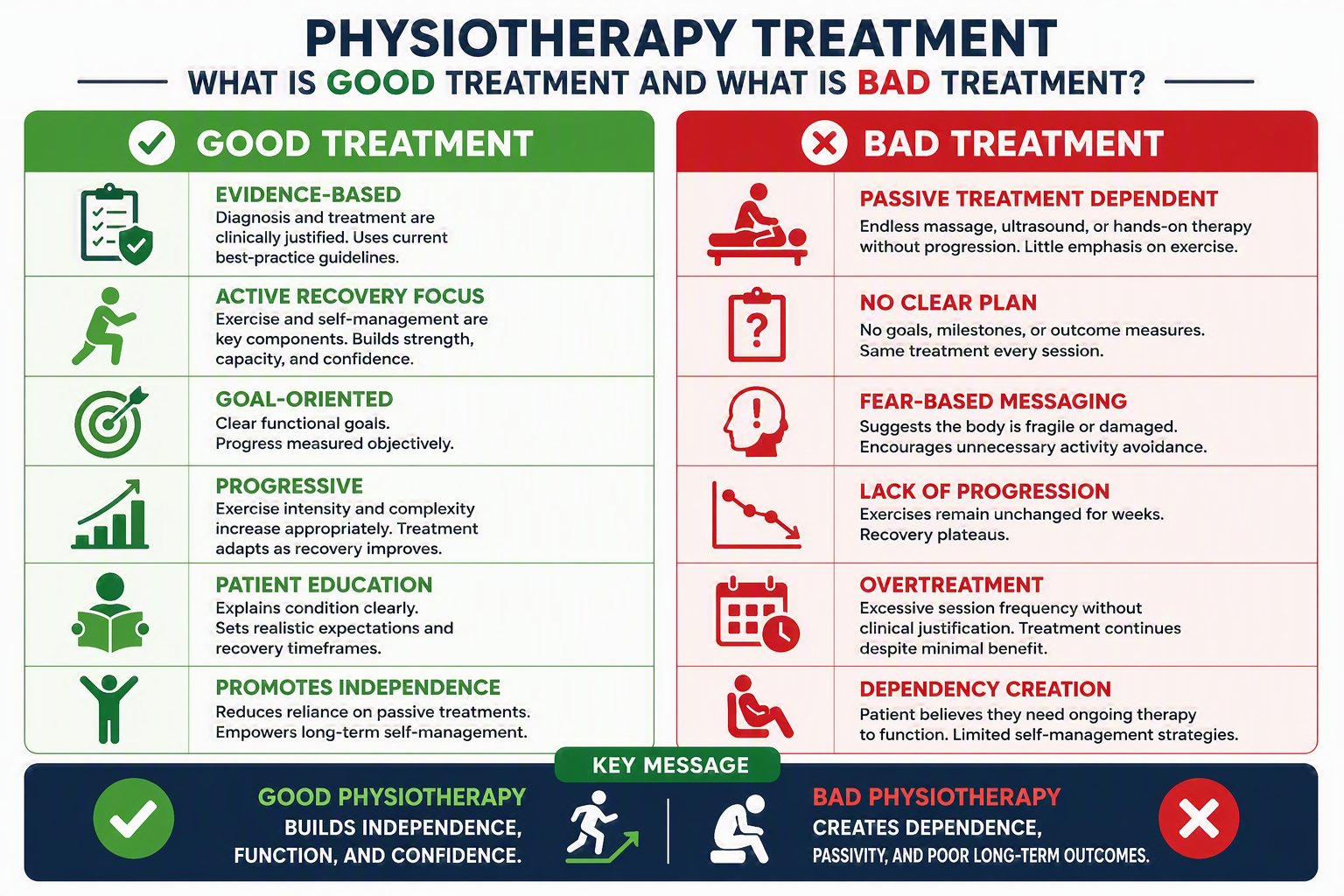
Best practice across private healthcare settings and in workers’ compensation should look very similar. Effective treatment is typically:
- Goal-driven with measurable progress over time [4]
- Supported by patient education. Your treatment providers should provide education about your injury and what your expected recovery timeframes are.
- Evidence-based [4]
- Treatment should be informed by a combination of research, clinical expertise and patient values.
- Designed to maintain activity and function
- Emphasis on movement, exercise and self-management strategies, avoiding unnecessary treatment
- Not reliant on passive treatment modalities
- No overreliance on passive modalities (massage, laser, TENS, interferential, red light therapy etc.)
- Staying active after injury reduces pain symptoms and helps return to usual activities sooner [4]
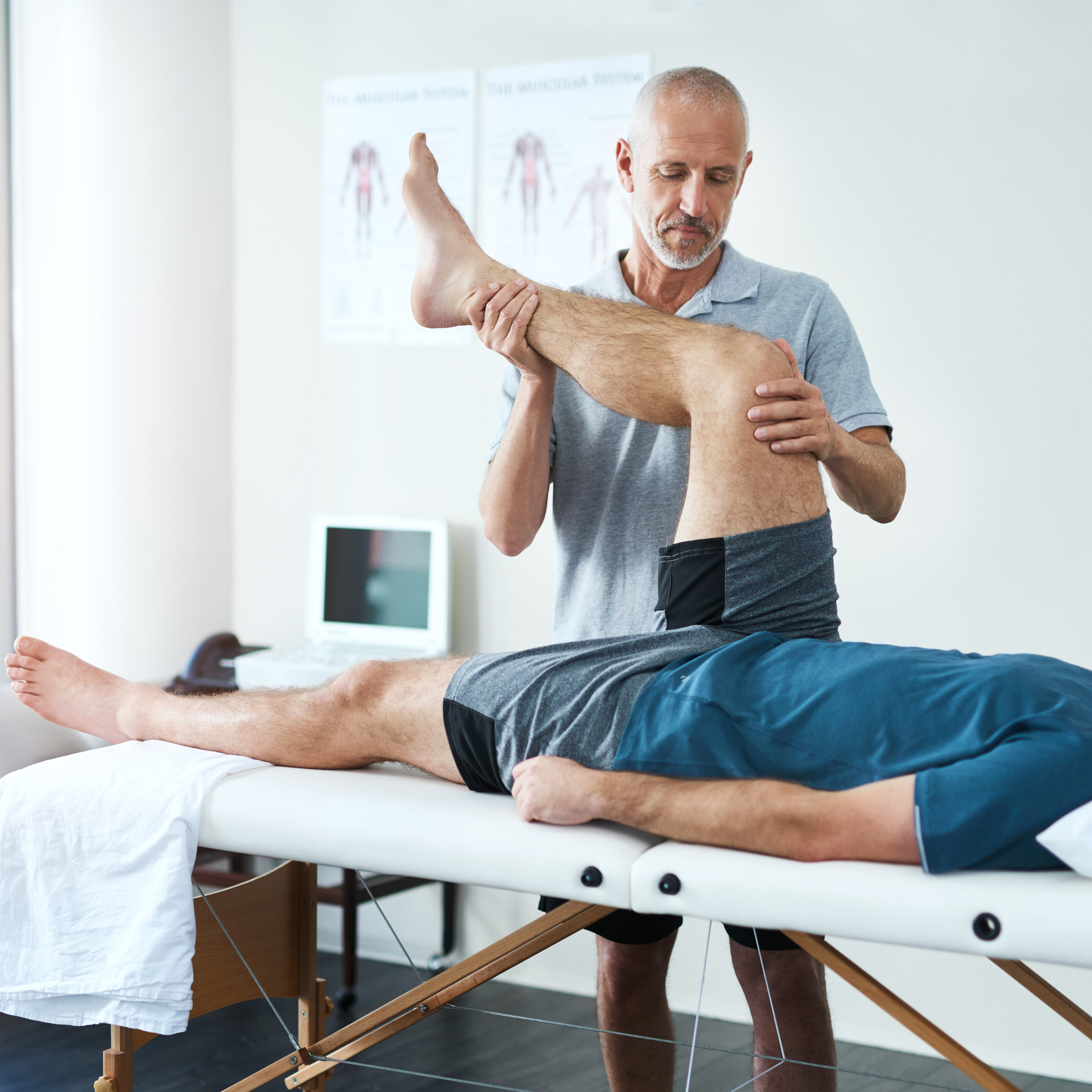
Work is treatment
Evidence shows that recovering at work after a work-related injury can be beneficial to your recovery: [4]
- Good work is therapeutic and promotes recovery.
- Safe work is good for you physically, socially and financially.
- Time off work is often not medically necessary and can delay recovery.
Research evidence
- opens in a new tabMusculoskeletal disorders | SafeWork NSW
- opens in a new tabHow Much Physiotherapy, Chiropractic, and Osteopathy Care Do Compensated Australian Workers with Low Back Pain Receive? A Retrospective Cohort Study - PMC
- opens in a new tabWorkers compensation guidelines | SIRA: Workers compensation claims management guide
- opens in a new tabWorkers compensation guide for allied health practitioners - SIRA